



The Foundations of Good Office Interior Design: What Every Business Should Consider
An office isn’t just a place where people show up to work — it’s an extension of the business itself. It reflects the company’s values, influences team morale, and shapes how clients and visitors perceive the brand.
In growing cities like Johor Bahru, where new businesses are emerging and established companies are rethinking how they use space, thoughtful office design has become more important than ever. Be it a creative studio in a shoplot or a corporate office in a mixed-use development, the fundamentals remain the same: a good workspace should feel purposeful, balanced, and genuinely supportive of the people who use it.
So what makes a good office interior design? It starts with a few foundational ideas — practical design principles that help transform any office from a basic work area into a space that works for the business.
Start with Purpose: What Does the Office Need to Do?
Before thinking about colour schemes or furniture, it’s essential to consider how the space will be used.
Every office serves different needs. Some are collaborative and fast-paced, others require quiet and focus. Some may need client-facing areas, while others are strictly for internal operations.
A well-designed office begins with this question: What does the team need to do here, and what kind of space will support that?
This drives decisions around layout, lighting, room divisions, acoustics, and the kind of furniture to include. Without this clarity, even the most stylish designs risk being impractical.
Layout and Flow: Giving the Space Structure
A good layout creates structure and logic in the space. It should feel intuitive, with clearly defined areas for different types of work. That doesn’t necessarily mean a row of identical cubicles or rigid divisions, but the flow of the space should make sense.
- Reception and waiting areas should be welcoming but not overbearing.
- Workstations should allow easy movement and communication, without feeling crowded.
- Private rooms or booths may be necessary for meetings, calls, or focused work.
- Shared zones like pantries or breakout areas provide relief from screen time and offer space for casual interaction.
Layout planning should also consider natural light, pathways, privacy needs, and overall flexibility. An office should support the present, but also adapt to future changes, like team growth or new work styles.
Prioritising Comfort: It’s Not a Luxury
Too often, comfort is treated as an afterthought in office design. Yet it’s one of the key factors in team satisfaction and productivity.
Comfort goes beyond ergonomic chairs (though those are essential). It includes:
- Temperature and airflow: No one does their best work in a freezing room or stuffy corner.
- Lighting: Harsh fluorescents create fatigue; soft, layered lighting — ideally with access to daylight — supports well-being.
- Noise control: A quiet zone can help balance the energy of an open-plan layout.
- Movement: Design should encourage healthy habits, such as space to stand, walk, or shift between seated and collaborative tasks.
An environment that feels good to work in, one that is physically supportive and mentally calming, can boost performance and reduce stress more than any productivity app ever could.
Design Language That Matches the Brand
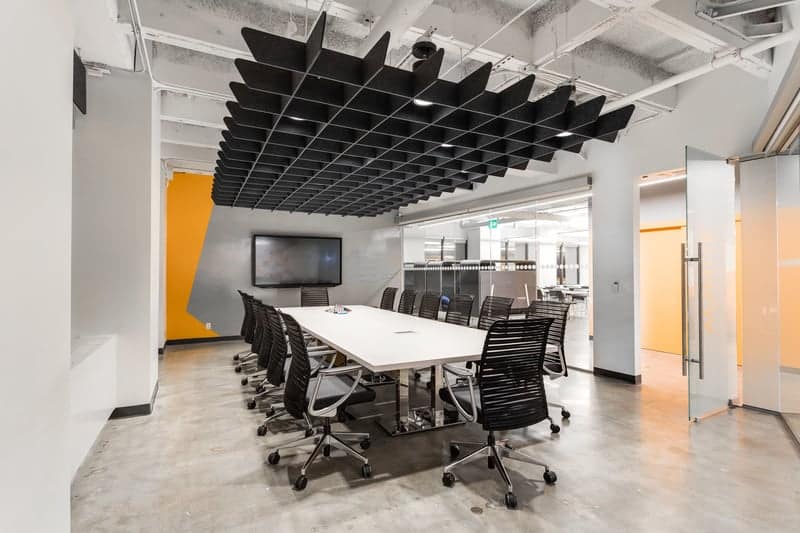
An office speaks volumes about a business, whether intentionally or not. The colours, materials, textures, and even the layout contribute to the overall impression it leaves on employees, clients, and partners.
A law firm might favour neutral tones, warm woods, and a clean, formal layout. A creative agency might opt for vibrant colour, bold artwork, and flexible work zones. The key is authenticity. The space should feel aligned with the identity and values of the company, not like a showroom or imitation of someone else’s style.
Design elements that help reflect a brand include:
- Colour schemes drawn from the logo or website
- Furniture styles that reflect company culture (formal vs relaxed)
- Art, signage, or décor that tells the story of the business
- Use of materials — such as raw finishes for a more industrial feel, or plush textures for something high-end
The Natural Touch: Bringing in the Outdoors
A concept known as biophilic design has become widely recognised as a contributor to improved mood, productivity, and overall satisfaction at work.
That doesn’t mean turning the office into a greenhouse. Even a few carefully chosen indoor plants, natural wood finishes, soft lighting, and good ventilation can make a noticeable difference. Access to natural light is especially important and should be maximised wherever possible.
Green touches also soften the look of an office and provide a needed visual break from screens and artificial surfaces.
Clean Lines and Clutter-Free Spaces
In a working environment, clutter has a way of building up, which is why storage should never be an afterthought in office design. Shelving, filing systems, hidden storage units, and cable management all help maintain a neat, streamlined appearance.
Open spaces with clean lines and minimal visual noise help teams stay focused and feel more at ease. This doesn’t mean the space has to be completely minimalistic, but it should feel intentional and organised.
Even creative offices with an eclectic style benefit from having order behind the charm, especially when clients and collaborators visit in person.
Future-Proofing the Space
Work habits have changed dramatically in recent years. Offices today need to be more flexible and tech-ready than ever before. That means:
- Planning for wireless connectivity and charging access
- Incorporating movable partitions or modular furniture
- Making room for video conferencing setups and hybrid work zones
Designing with the future in mind doesn’t just protect the investment — it ensures the office remains functional and relevant even as technology and team dynamics evolve.
Final Thoughts
A good office interior doesn’t shout. It supports. It makes work easier, people more comfortable, and the brand more tangible. When design is rooted in function and guided by the real needs of a team, the results are not only attractive — they’re lasting.
Be it a start-up setting up its first base in Johor Bahru or an established firm giving its workspace a refresh, the principles stay the same: understand the space, design around its purpose, and always leave room for people to do their best work.
Because at the end of the day, the best offices aren’t just well designed, but they’re also well lived in.